2025 / Proceedings of the 23rd ACM Conference on Embedded Networked Sensor Systems
Detecting Context Shifts in the Human Experience Using Multimodal Foundation Models
Iris Nguyen, Liying Han, Burke Dambly, Alireza Kazemi, et al.
This project integrates smartphone-based experiential sensing, wearables, and intracranial neural recordings to study autobiographical memory formation during real-world behavior and to inform future memory-enhancing neuromodulation.
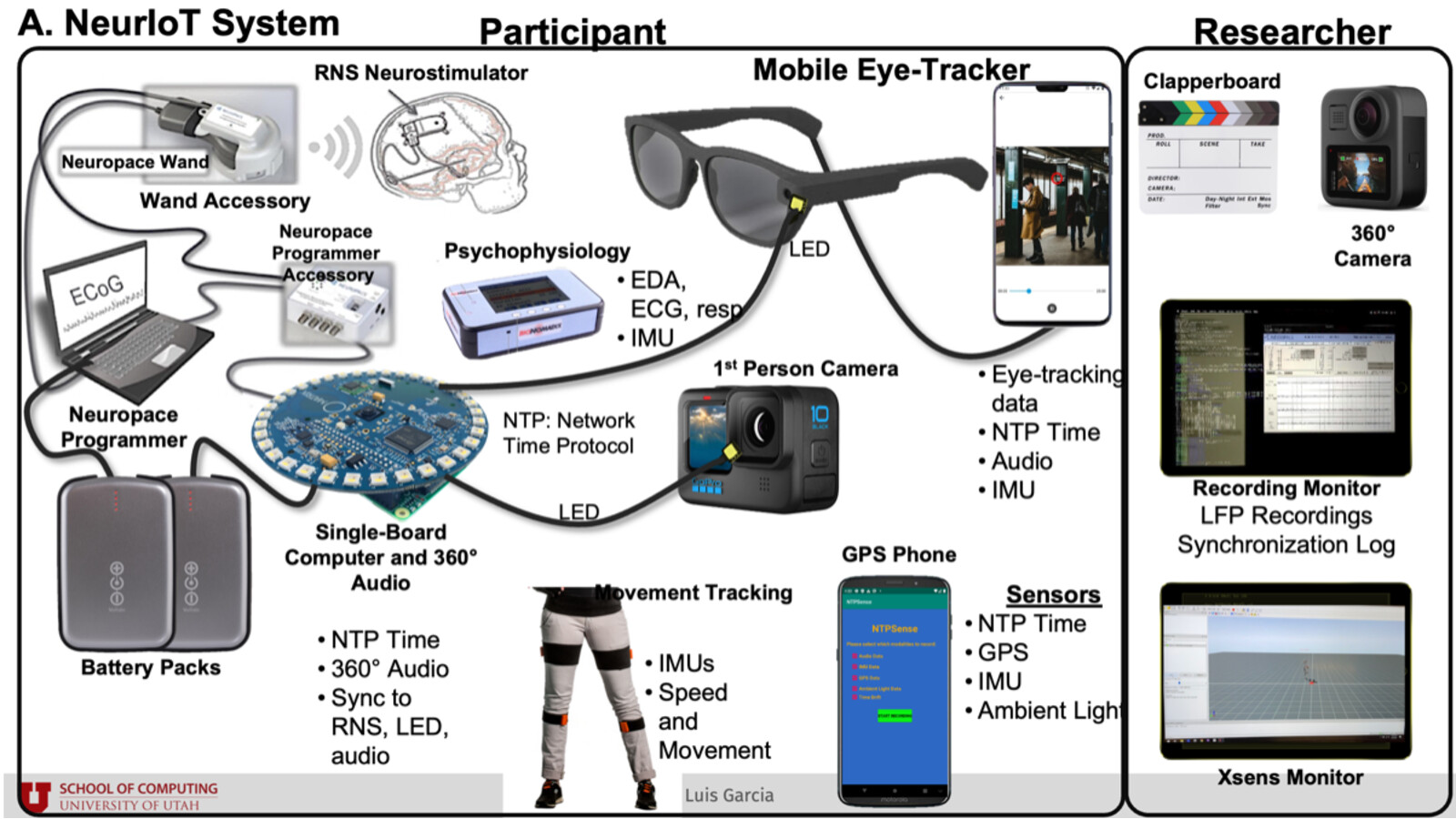
Overview
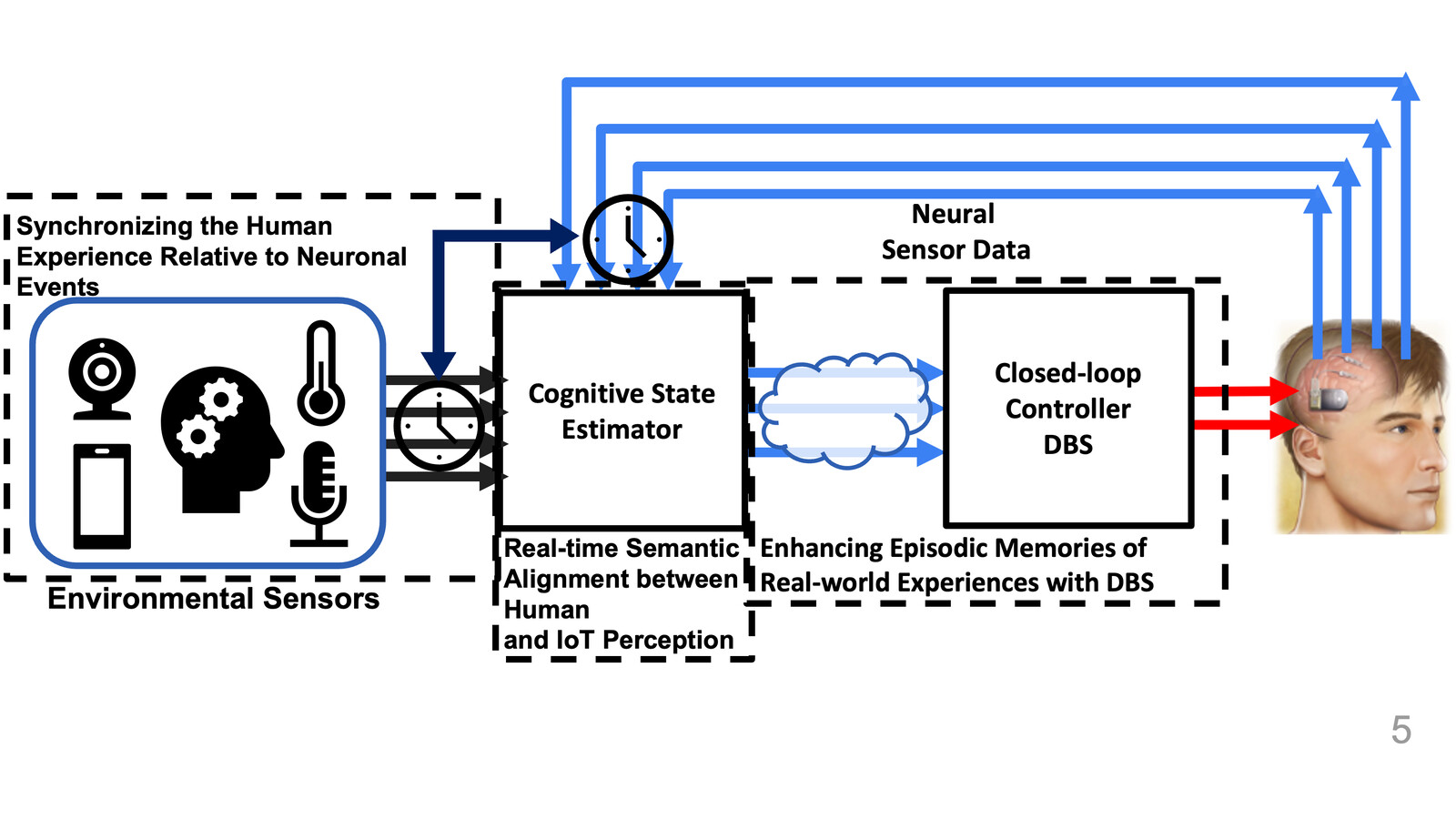
The NIH project combines continuous multimodal sensing (audio/video, GPS, IMU, eye-tracking, physiology, and self-reports) with precisely synchronized intracranial recordings from participants with chronically implanted therapeutic devices.
A core objective is to capture and analyze autobiographical memory encoding in natural settings rather than only controlled laboratory tasks. The effort includes development of the CAPTURE mobile recording app and analysis pipelines for large multimodal streams.
By linking real-world behavioral context to neural activity, the project establishes translational foundations for future closed-loop interventions aimed at improving memory outcomes in neurological disorders.
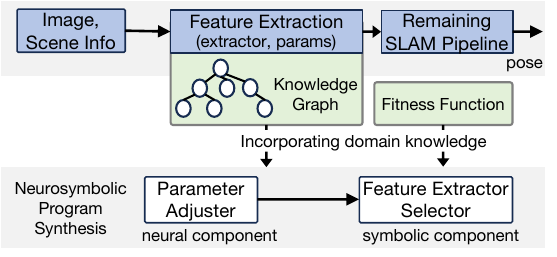
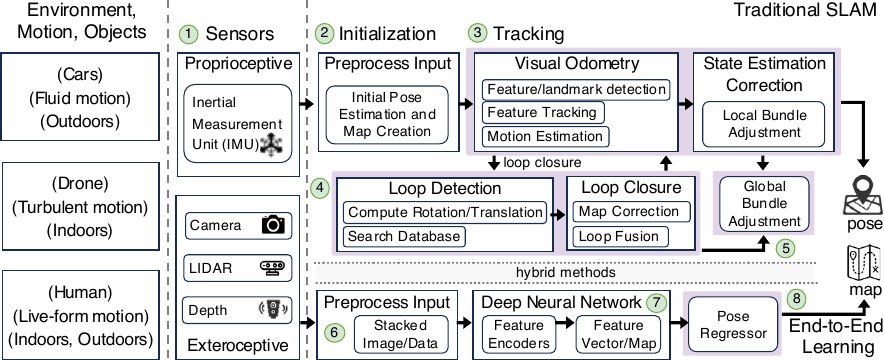
An active Trustworthy Mixed Reality thread evaluates robustness of visual tracking and context alignment pipelines that support reliable in-the-wild cognitive experimentation.
Capabilities
Synchronized collection of neural, wearable, and environmental data streams during unconstrained real-world behavior
Multimodal alignment methods for time-locked analysis across intracranial signals and sensed context
Sensor-fusion and model-building workflows for context-shift and event-boundary detection
End-to-end mobile tooling for in-the-wild experimental capture at scale
Translational analysis pipeline connecting neural markers to memory-relevant behavior
Robustness analysis for XR tracking pipelines used in real-world cognitive sensing workflows
Use Cases
Studying autobiographical memory encoding and retrieval in daily-life environments
Detecting context shifts from multimodal sensory and neural observations
Characterizing neural signatures that can support future adaptive stimulation policies
Evaluating robustness of real-world brain-and-sensor data fusion workflows
Assessing trustworthy mixed reality sensing reliability for longitudinal cognitive experiments
Figures
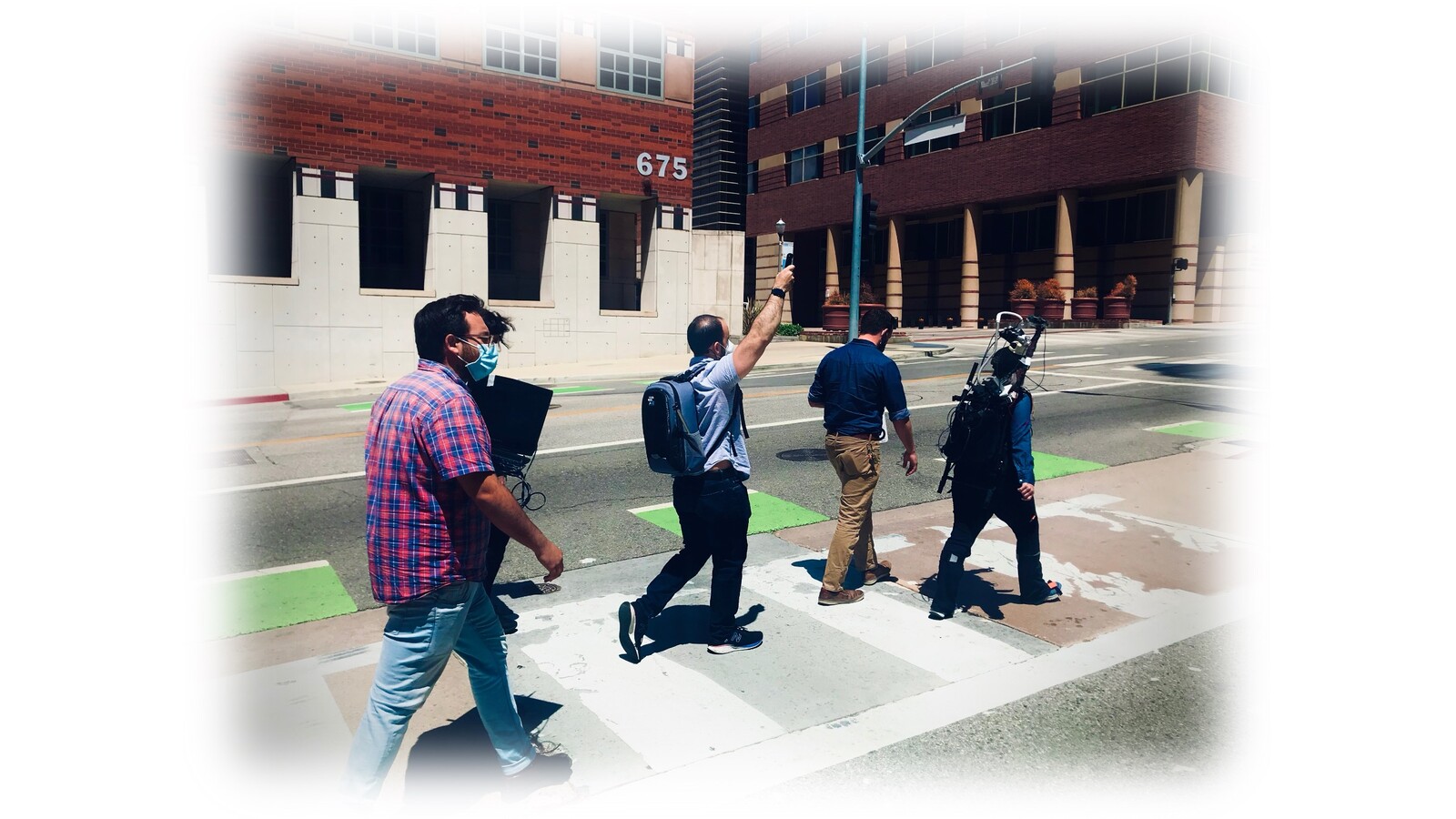
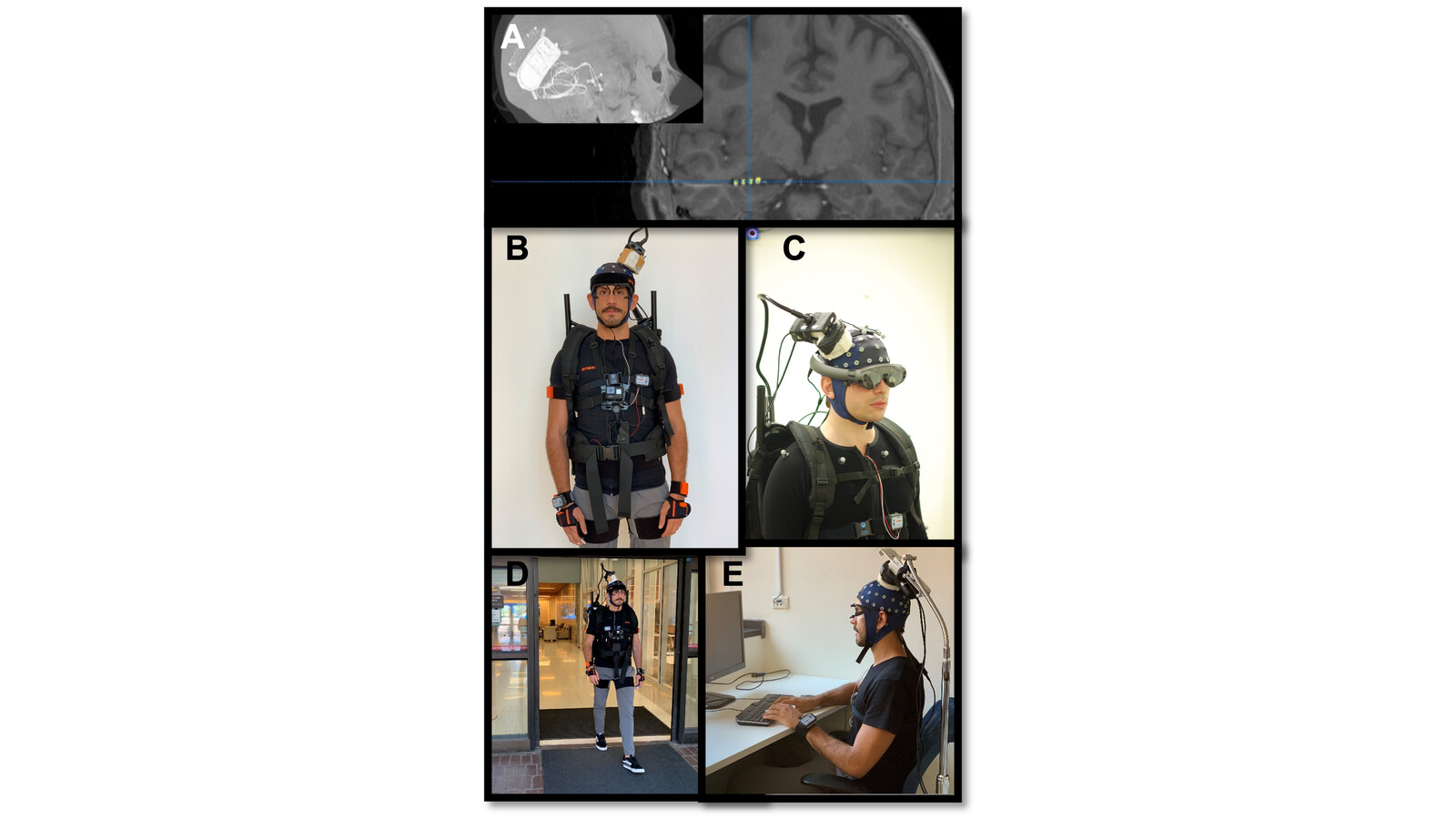
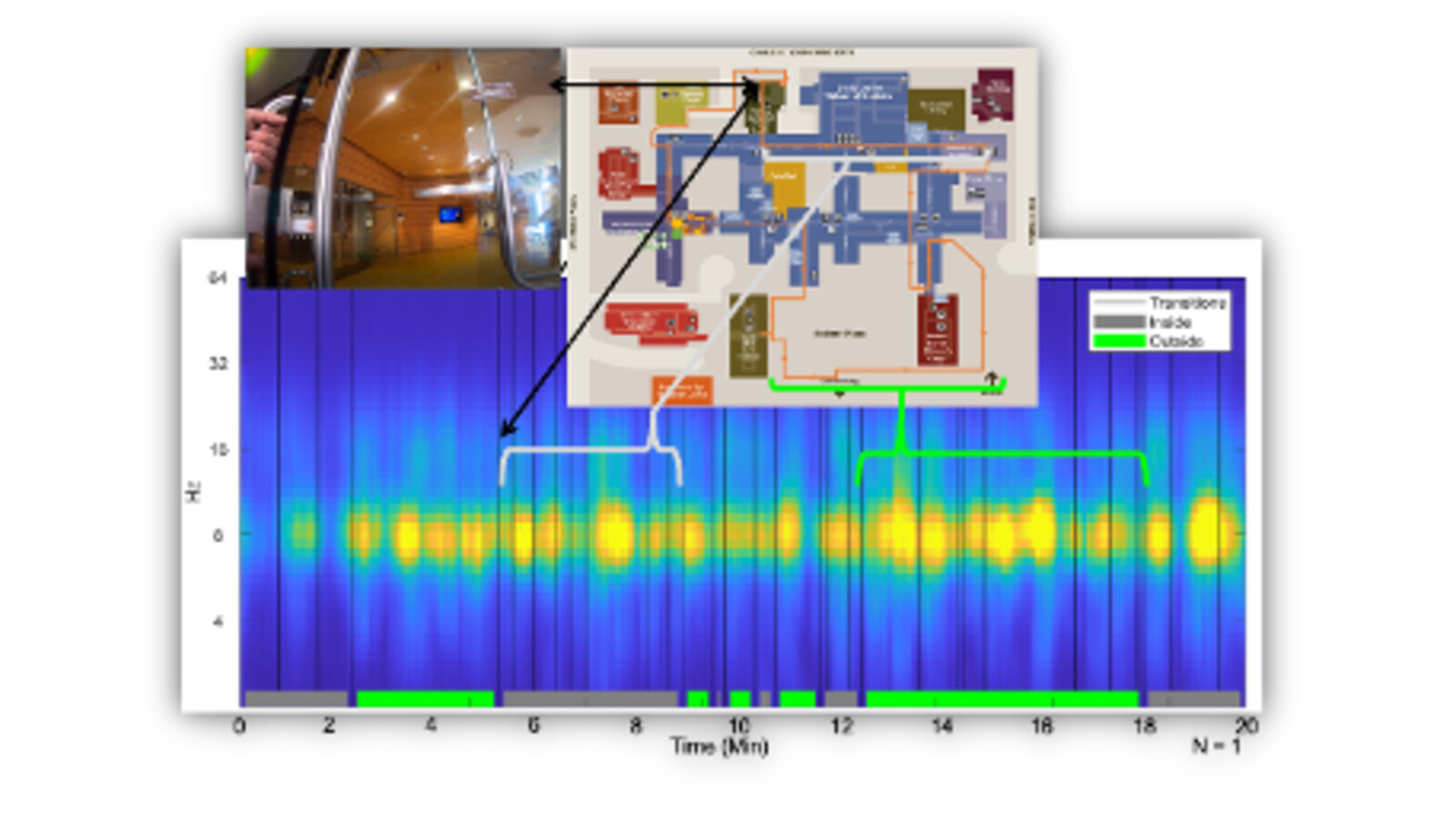
Publications
2025 / Proceedings of the 23rd ACM Conference on Embedded Networked Sensor Systems
Iris Nguyen, Liying Han, Burke Dambly, Alireza Kazemi, et al.
2024 / 2024 IEEE/RSJ International Conference on Intelligent Robots and Systems (IROS)
Yasra Chandio, Momin A Khan, Khotso Selialia, Luis Garcia, et al.
2025 / ACM Transactions on Sensor Networks (TOSN)
Yasra Chandio, Khotso Selialia, Joseph DeGol, Luis Garcia, et al.
Related Work